Case study · Music retail · Rayleigh
8Music
An independent music shop in Rayleigh with 770 products online, and the SEO and product-data work, down to its GTINs and SKUs, that brings its website, its product feed and Google Merchant Center into line.
The brief
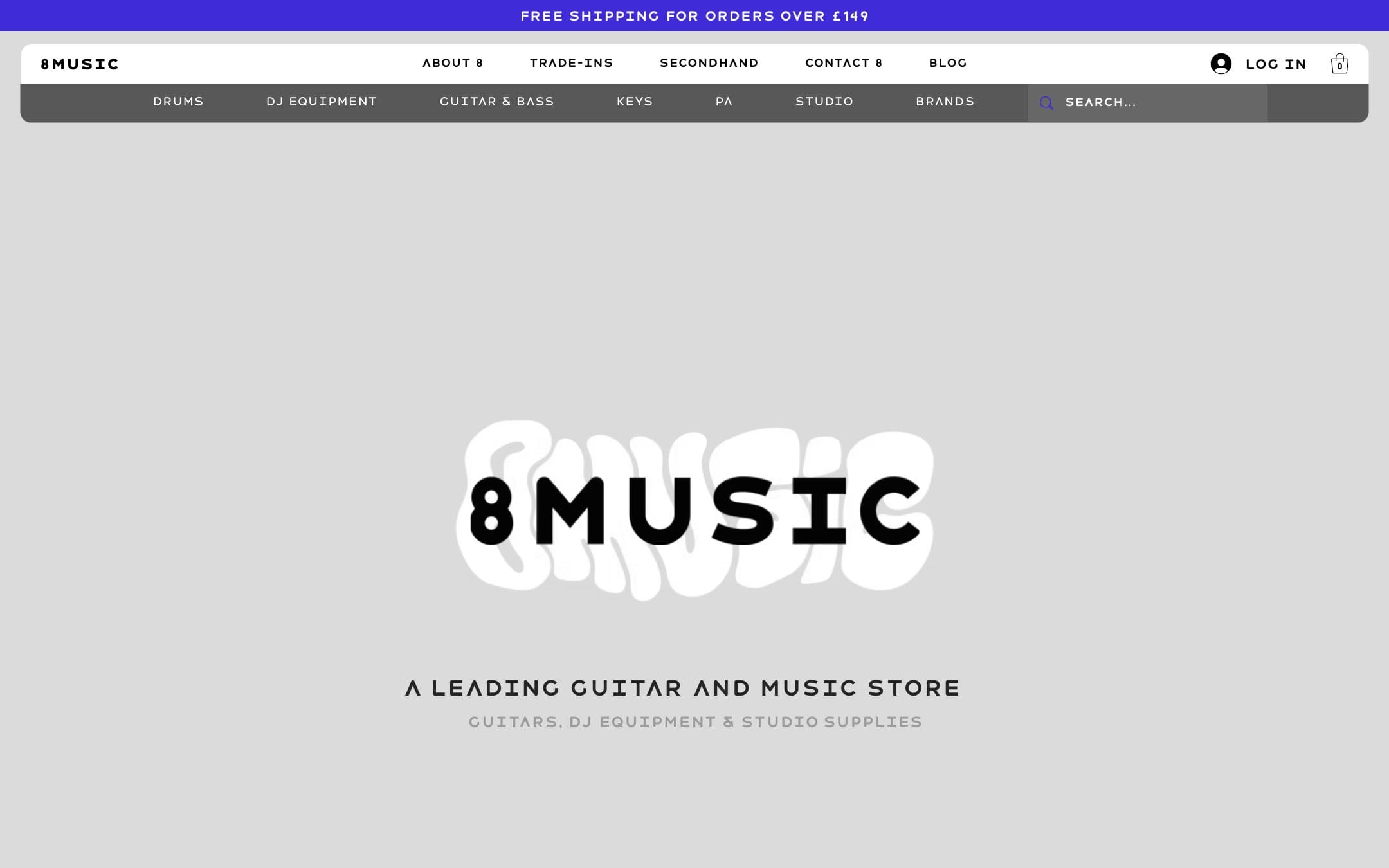
8Music is an independent music shop at 138 Hockley Road in Rayleigh, owned and run by Reece Hope. It sells guitars and basses, keys, drums, DJ equipment, PA and studio gear in the shop and online across the UK, with a secondhand section and trade-ins alongside the new stock. The online shop runs to 770 products.
Shops get their products into Google Shopping through Google Merchant Center, and Merchant Center does not judge a shop on its product feed alone. Google's guidance asks for a store that is open about who runs it and how to reach it, shows its reputation, has its business information filled in and keeps its product data matching the website. Most of that is SEO by another name: structured data, consistent business details, working links and pages that say plainly who the shop is.
So the brief was practical. Find everything standing between 8Music's catalogue and Google Shopping, put it in the order that mattered, and fix it inside the shop's existing Wix store.
What we built
We did not build 8Music's website. What we built was the evidence, then the fix list, then the fixes. In September 2026 the audit inventoried 876 page addresses from the shop's sitemaps and fetched 307 pages: all eight content pages, nine blog pages, 89 categories and a sample of 201 products, with 22 categories re-checked in a real browser. It read the structured data on 199 product pages, compared the shop's name, address, phone, email, company number and VAT number across 303 pages, and checked the checkout, the security certificate, the redirects and the public company record. Three days later a re-check went over the live site, the off-site listings and Google's and Wix's current documentation again, tested each finding with a second pass that tried to disprove it, and corrected the first report wherever the fresh evidence disagreed.
The fix list runs in priority order, each item with click-by-click steps and the exact words to paste, and a script re-reads the live site after every publish to mark each fix live or not yet. Much of Merchant Center's checking is automated, so the changes a machine can verify went first. The catalogue had been arriving in Merchant Center through two data sources at once; it now arrives through one. Merchant Center's business information now carries the shop's name, customer service page, email and phone, the shop's Google Business Profile is linked to the account, and the delivery and returns settings match the shop's published policy, from the order cut-off and handling time to who pays for a return. Working from the shop's product CSV, with its SKUs, brands, prices and stock levels, and from Merchant Center's own export, every product Merchant Center holds was checked against the live website on price, stock, brand and title. Thirteen sold one-off secondhand listings were hidden, one product title was rewritten within Wix's 80-character limit and one brand was corrected.
On the website, the changes went where customers and Google look for a real business. The Contact page now gives the shop's address with a map, the About page says who owns and runs 8Music, the footer carries the full company line, and the terms and returns policy give the address in full. The About, Contact and Trade-ins pages show photographs of the shop itself, and the shop's Google rating appears as a line of plain text on the home and About pages. An old block of custom structured data on the All Products page, which no longer matched the shop, was removed, two meta descriptions were rewritten, and links to pages that no longer existed came out of the menu and the footer.
The details that mattered
Every product page's structured data named the seller as '8 Music', with a space, while the shop calls itself 8Music. The name came from a single field in the Wix business settings. After the fix, a crawl of all 770 product pages found 8Music on every one, with prices in pounds and no page set to noindex.
Merchant Center was receiving the catalogue twice, once from Wix's Google app and once from a catalogue link added as a second data source, and listed 105 products as uploaded through more than one feed. Google gives a product to whichever source updated it last, and deleting a source takes its products with it, so the clean-up was ordered to leave one working feed and never an empty account.
A GTIN is the barcode number a manufacturer gives a product, an MPN is the manufacturer's part number and a SKU is the shop's own code for each item. Google uses the GTIN, or the brand and MPN together, to recognise that a guitar on 8Music is the same guitar sold everywhere else; without them a product can still be listed, but where it appears is limited. The audit found no GTIN, MPN or condition in the structured data of any of the 199 product pages it read, and secondhand stock was going to Google as new. We brought the identifiers up to ecommerce standards: every catalogue line keeps its own unique SKU, products carry the manufacturer's GTIN where one exists and brand with MPN where it does not, and because this Merchant Center account offers no attribute rules or supplementary feeds, condition is set item by item.
The audit checked the shop's name, address, phone, email, company number and VAT number on 303 pages and found them consistent on every one. The report listed what was already right as carefully as what was wrong, from the payment icons to the product prices, so no time went on fixing things that already worked.
Wix Studio keeps a separate layout for desktop, tablet and phone, so every change was measured in a real browser at all three sizes after each publish. That caught the footer company line rendering at 6px on a phone and sitting behind a floating reviews badge on a computer; it now reads at 12px on all three. The badge showed a different review count from the Google profile, so it was switched off, and the rating now sits on the page as plain text, the part a crawler can actually read.