Services · Compliance reviews
Compliance reviews: 8Music, two years stuck, through in two weeks
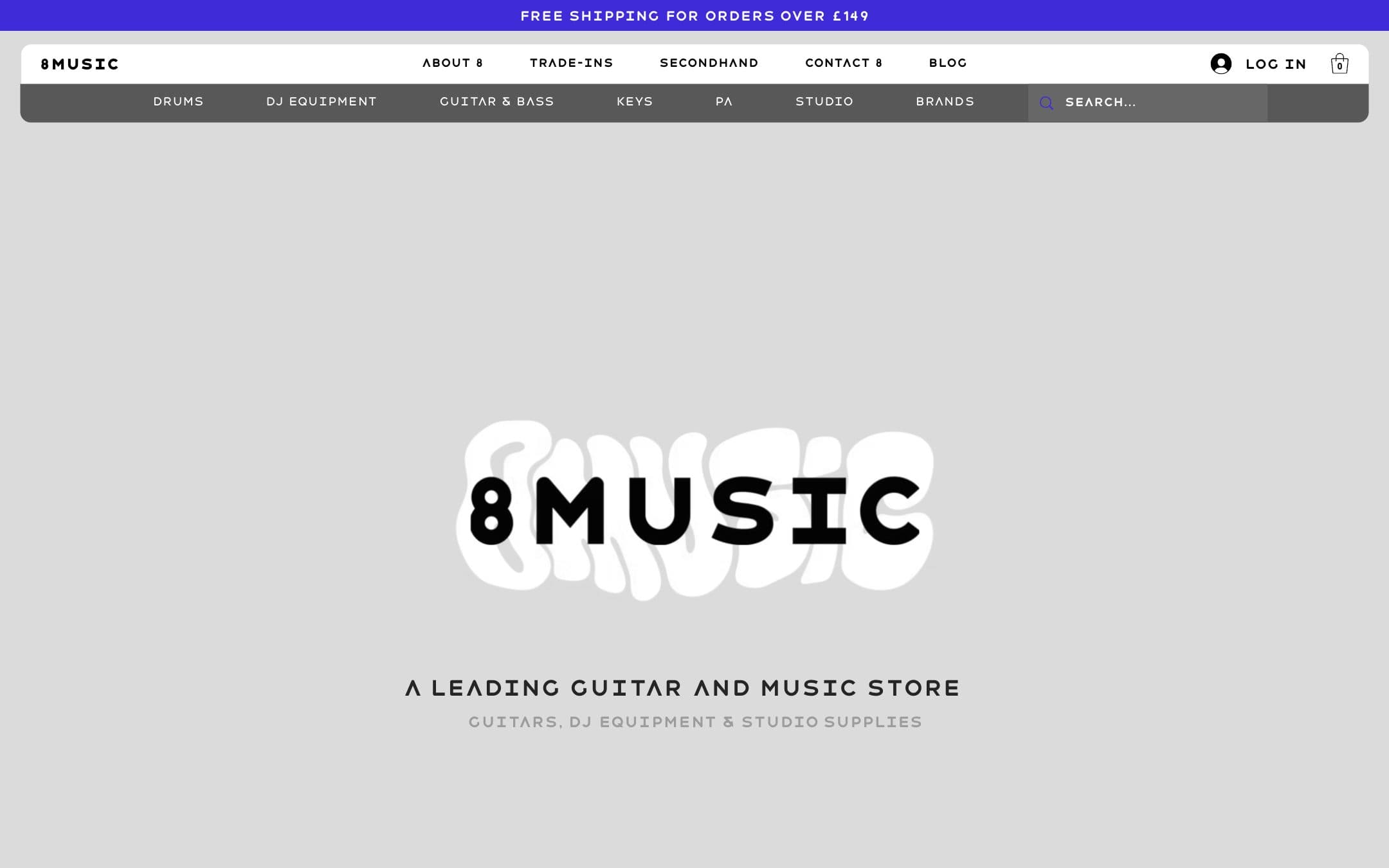
Reece Hope had spent about two years trying to get 8Music, his Rayleigh music shop, through Google Merchant Center. Two weeks after we started, in October 2026, its account passed Google's review. A compliance review checks your website, and any Merchant Center account, against Google's requirements and the UK rules that touch websites in your sector, and ends with a written report and a fix list in priority order. Luke Dykes runs every review from Southend-on-Sea, after six years in UK frontline public service with the police, Border Force and HMRC.
Who it is for
This is for online shops trying to get their products into Google's shopping results through Google Merchant Center. Your account might be new and under review, your products might have been disapproved, or Google might have flagged the shop for misrepresentation and you cannot see why. An honest shop can still fall foul of it by leaving things out. Merchant Center does not judge a shop on its product feed alone. It checks who runs the business, how to reach it, what the delivery and returns terms say, and whether the prices and stock on the website match what Google has been sent. Each unsuccessful review can mean a longer wait before you can ask again, so it pays to fix everything before you ask Google to look.
It is also for businesses whose websites answer to rules of their own. Four sectors have a page each, setting out what a review checks there, where each rule comes from and who it applies to. For an online shop, that runs from the information a customer sees before ordering to the words on the final checkout button. For a restaurant, café, bar or takeaway, it covers allergen information on online orders, menu claims and booking terms. For a salon, barber or aesthetics clinic, it covers treatment pages, before-and-after photos and anything that could advertise a prescription-only medicine. For a builder or trade, it covers trade logos, Gas Safe details, guarantees and cancellation rights.
And it is for any business that wants one careful look at its website and marketing, before a relaunch or before an ad campaign sends people to it, or just a straight answer to a single question. Are your company details on the site and the same as the Companies House record? Does your cookie banner let people say no as easily as yes? Do the reviews, ratings and claims on your pages stand up? Does your Google Business Profile say the same thing as your website? A review can cover all of that, or only the part you are worried about.
You do not need a new website to have one reviewed. The site can be one we built, one somebody else built or one you put together yourself. We did not build 8Music's website. We reviewed its live site and its Merchant Center account, made the fixes inside its existing Wix store and that account, and in October 2026, two weeks after we started, the account passed Google's review. If a review shows your site cannot be fixed in place, we will say so.
What is included
Google Merchant Center readiness
The account's business information, the link to your Google Business Profile, the delivery and returns settings against the policy on your site, the data sources feeding your catalogue, and every issue the account is already showing.
The UK rules for your sector
For online shops, restaurants, cafés, bars and takeaways, salons, barbers and aesthetics clinics, and builders and trades: the rules that touch the website, from consumer contracts and pricing to allergens, medicines advertising and trade logos. Each sector page lists the checks, where each rule comes from and who it applies to, and leaves out anything not yet in force.
Trust and company details
Who runs the business, where it is and how to reach it, said plainly on the site and checked against the list in the Electronic Commerce Regulations 2002: a real address, an email address as well as any contact form, and a VAT number if you are registered. Delivery, returns and privacy pages that are easy to find, a checkout that works on a secure connection, no placeholder text or dead links and, for a limited company, the registered name, number, office and part of the UK it is registered in, which the Companies Act trading disclosure rules require on its website, matched to Companies House.
Product data
Every product Merchant Center holds checked against its live page on price, sale price, stock, brand and title, with GTINs, MPNs, SKUs and condition, so secondhand stock does not go to Google as new.
The same business everywhere
Your name, address, phone, email, company number and VAT number compared across the site, its structured data, Merchant Center and your Google Business Profile, down to a profile name that matches the one over the door, so that all four show one business with one name.
Structured data and search basics
The structured data read page by page and checked against what each page actually says, plus titles, descriptions, redirects and pages set to noindex by mistake.
Cookie consent and privacy
Every cookie, tag and pixel the site sets or loads, listed with what it is for. We check that anything needing consent, advertising tags above all, waits for the visitor's answer, that saying no is as easy as saying yes, and that the privacy notice describes what the site actually does. The consent rules for every UK website changed in February 2026, under the Data (Use and Access) Act 2025, so where it is unclear whether something needs consent, the report marks it for a legal view. Since 19 June 2026 the same Act has required every organisation that handles personal data to give people a way to make a data protection complaint to it, and the review checks the site offers one.
Reviews, prices and marketing claims
Every review and rating on the site traced to its source and checked against that source's current count: since April 2025 the Digital Markets, Competition and Consumers Act 2024 has banned fake reviews, hidden incentives for reviews and reviews presented in a misleading way, for every UK trader dealing with consumers. Prices checked for compulsory fees that first appear at checkout, which the same Act says belong in the price shown wherever they can be worked out in advance. Claims that can be proved or disproved, such as 'best in Essex', 'was £99', 'only 2 left' or a countdown timer, flagged wherever the business cannot back them up, on your pages and in the ads or posts that point to them. On 8Music, the Merchant Center work turned up a reviews badge showing a different count from the Google profile, so it was switched off.
A written report and fix list
Findings in priority order, each naming the requirement it was checked against, with click-by-click steps and the exact words to paste, alongside what is already right and anything that could not be checked. The report is yours, whoever makes the fixes.
How it runs
- Agree the scopeTell us what needs checking: a Merchant Center account, the rules for your sector, the whole site or one question. The scope, a firm price and a realistic timeline are agreed in writing before any work starts.
- Gather the evidenceWe fetch the site the way a crawler does, read its structured data page by page and check the pages that matter in a real browser on a computer, a tablet and a phone. With access to Merchant Center, we work from its settings, its issues and its product export too.
- Try to prove it wrongA second pass goes over the live site and the current rules and guidance again and tries to disprove each finding. Wherever the fresh evidence disagrees, the report is corrected.
- Write it downFindings ranked by effect for the effort, each with click-by-click steps and the exact words to paste, and a list of what is already right, so no time goes on fixing things that already work. Anything that needs a legal view is marked as such.
- Fix and re-checkYou can make the fixes yourself from the report, or we make them, quoted separately. When we do, a script re-reads the live site after every publish and marks each fix live or not yet, and every change is checked on a computer, a tablet and a phone.
- Ask Google to lookFor Merchant Center, any request for a review goes in last, once the fixes are live and re-checked. Some steps, such as Google's identity or business verification, have to be completed by someone from the business itself. Google then makes its decision, on its own schedule.
The rules for your sector
Four sectors have a page of their own, each setting out the UK rules a review checks on that kind of website, where each rule comes from and who it applies to: online shops; restaurants, cafés, bars and takeaways; salons, barbers and aesthetics clinics; and builders and trades.
- Online shopsMerchant Center, the 14-day right to cancel, the checkout button, prices, reviews and ad pixels.
- Restaurants, cafés, bars and takeawaysAllergens for online orders, menu claims, service charges, deposits, alcohol and reviews.
- Salons, barbers and aesthetics clinicsPrescription-only medicines, under-18s, before-and-after photos, prices, no-show fees and reviews.
- Builders and tradesGas Safe and trade logos, cancelling a job agreed at home, VAT, guarantees, photos and reviews.
Honest scope notes
How it works: a review has a fixed scope, agreed in writing before it starts, and it ends with a report you keep, whether or not we do the fixes. It is not the free audit, which scores one page automatically, and it is not our SEO service, which is the longer work of getting found. If the review shows your site needs SEO work or a rebuild, we will say so and you decide. If the free audit already answers your question, use that and save your money.
The honest bit: this is not legal advice. I am not a solicitor, and a review is a check against Google's requirements and the published rules and guidance, not a certificate that your business is compliant. Where a point needs a legal view, the report says so. Nor can anyone outside Google or a regulator promise what they decide. What we promise is that every finding has survived a second pass that tried to disprove it, and every fix is written down so you can check it.
The Merchant Center proof on this page is one shop, 8Music, and we would rather show you one real result than hint at a long list. The sector pages set out what a review checks, not reviews we have already done. The consent and claims checks are the ones we hold our own site to: Google Analytics here loads only after you press Accept, saying no is as easy as saying yes, and every client review we quote is word for word, spelling included.
Some rules need a specialist. Financial promotions, gambling, and health, nutrition or medicinal claims about products, food and supplements included, sit outside the review unless a sector page covers them. In the four sectors with a page of their own, the line is drawn the same way: the review checks what the website and its marketing say, not the work or the goods behind them. For a shop, that means the checkout, prices and policies, not product safety or the rules for age-restricted goods. For a clinic, treatment pages, prices, photos and posts, including anything that could advertise a prescription-only medicine, but not clinical practice, prescribing or registration with a health regulator. For a restaurant, the online menu and whether its allergen information is there, up to date and easy to find, but not whether it is accurate, the kitchen itself or the premises licence. For a builder, the trade logos and guarantees on the site, not whether a job needs planning permission. If any part of your question falls outside, we will tell you at the start, rather than halfway through. And we cannot verify your identity or business documents with Google for you: Google needs that done by the business itself, so we get the account and the site ready and walk you through the steps.
Or start smaller
Try the free audit first.
The audit reads one page, scores it out of 100 in about a minute and needs no email for the score. If it already answers your question, use that and save your money.
In a client's words
“Great friend help from start to finish. Really cared about this issues I had with my website and helped from start to finish to solve all problems. I would recommend as very fairly priced. Thank you Luke.”
Fair questions
What does misrepresentation mean in Google Merchant Center?
Can you help if my Merchant Center account has been suspended or flagged?
Can you guarantee Google will pass my shop?
Why are my products not showing on Google Shopping?
Why should I trust you with compliance?
Is this legal advice?
Do I need a cookie banner?
How is this different from your free audit and your SEO service?
Do I have to use you for the fixes?
How long does a review take?
What does a review cost?
Tell me what you need. You will get a straight answer and a firm price in writing.
Or call 07438 284755 or email luke@owntimestudios.com.