Case study · Photography · Essex
Katie Watts Photography
An image-heavy portfolio built to stay fast: the photographs do the talking and the engineering stays out of sight.
The brief
Katie Watts is a children's fashion and lifestyle photographer based in Essex, shooting lookbooks and campaigns for independent clothing brands. Her photographs are the whole pitch. The site's only job was to show them well and get an enquiry to her inbox.
The hard part is physics. A portfolio that opens on a full wall of photographs is exactly the kind of site that crawls on a phone signal, and a slow photographer's site argues against itself. So we set the brief plainly: every gallery generous, every page quick, nothing standing between a visitor and the pictures.
What we built
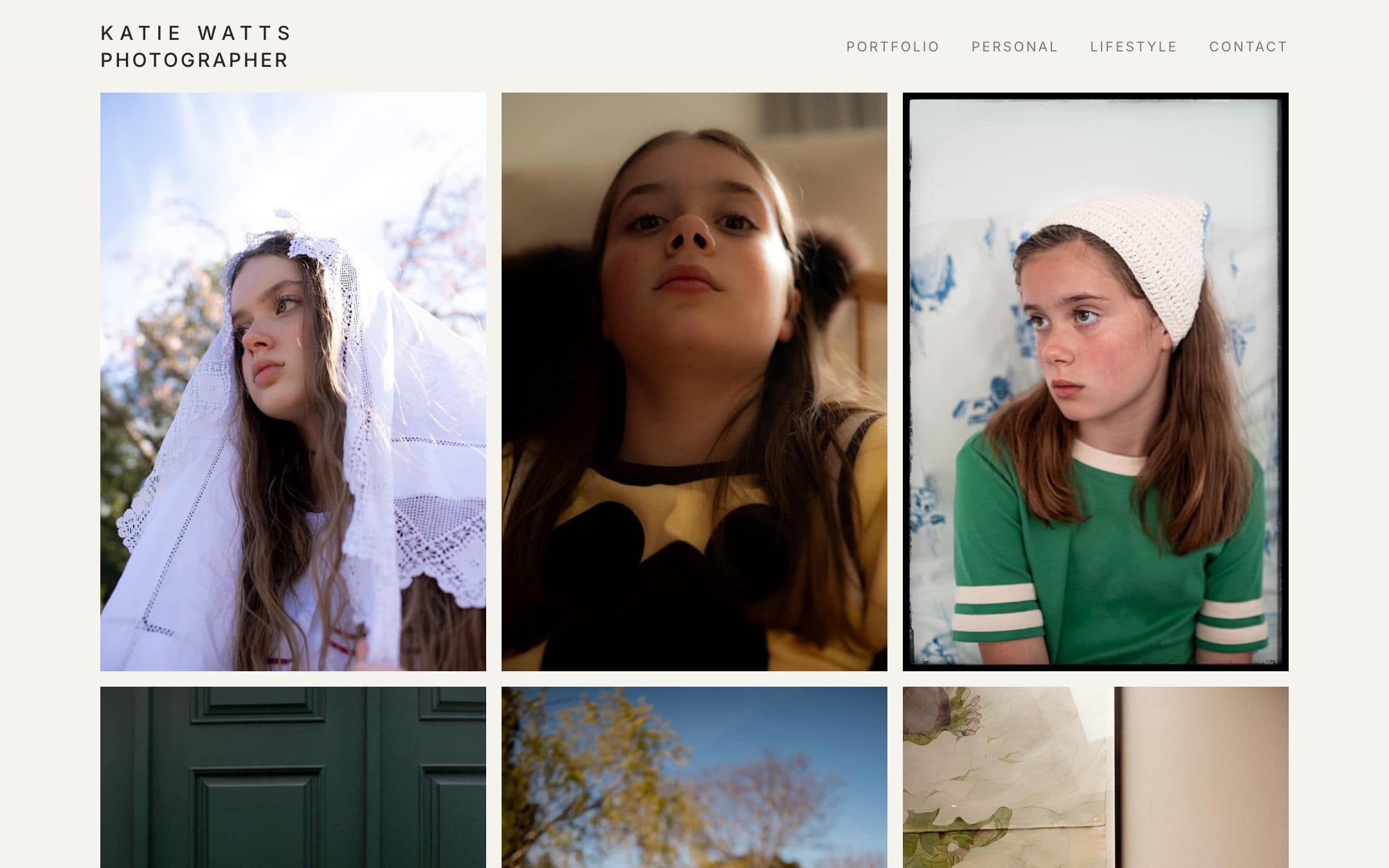
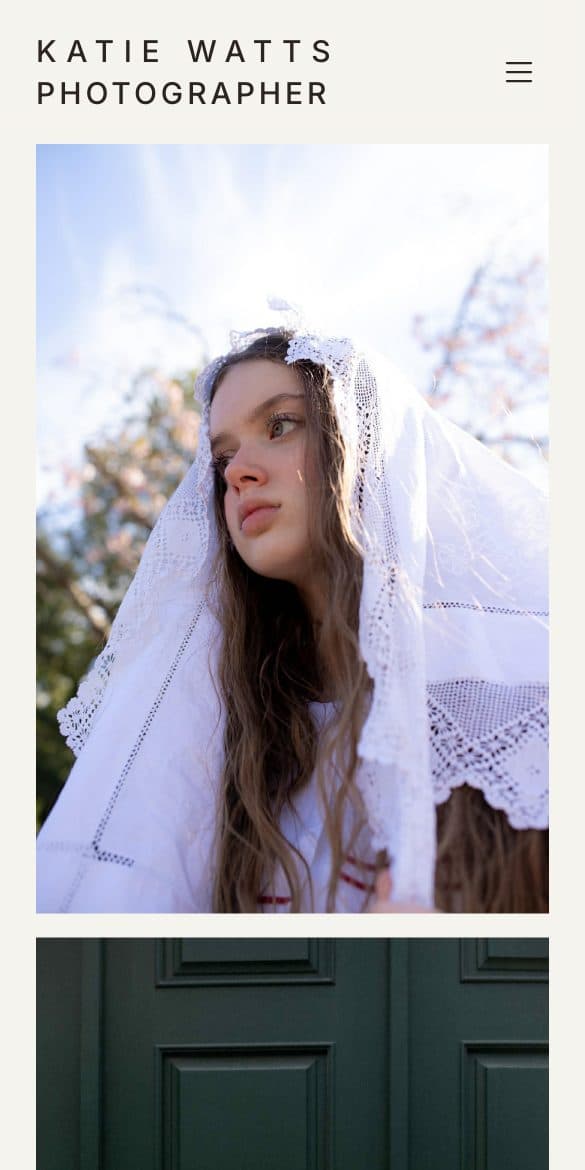
We built a static site with three galleries, Portfolio, Personal and Lifestyle, each laid out as a masonry grid that flows from three columns on desktop down to a single column on a phone, with layout rules in place so no photograph is ever split across columns. Tapping any image opens a full-screen lightbox, and Escape, the close button or a tap on the backdrop puts you straight back where you were.
Speed came from restraint. The pages are prebuilt and ship with only a few small scripts, served from a global edge network so the site sits close to visitors wherever they are. The home gallery paints its first photographs immediately and holds the rest behind a load-more control, so the opening view never waits on the full set of over 40 images.
Around the pictures we did the quiet work: a contact page with her email, Instagram and a short enquiry form that lands straight in her inbox, structured data describing her as an Essex photography business, canonical URLs on every page, and social preview images so a shared link shows a photograph rather than a blank card.
The details that mattered
The home page carries over 40 photographs, but only the first eight render in the opening grid. The rest wait behind a load-more control and fade in one after another, a tenth of a second apart.
Every image on the site is lazy-loaded, so a phone downloads only the photographs a visitor actually scrolls to, and each one carries descriptive alt text.
The lightbox closes on Escape, on the close button, or on a click anywhere outside the image, locks background scrolling while open, and clears the image source once the closing fade finishes.
The identity is typographic: her name set in widely tracked capitals on a warm paper ground, with the browser's theme colour matched to the same off-white so the page and the phone chrome read as one surface.
The enquiry form posts to a small third-party form service, so there is no server of her own to maintain, then returns visitors to the contact page with a success state.
Want one like this for your business?
A free demo first, with your content. Then a firm price in writing.
Or call 07438 284755 or email luke@owntimestudios.com.