Case study · Hospitality · Leigh-on-Sea
ONE94
A bar and games venue on Leigh Road, running hourly bookings, event enquiries and card payments like a much bigger operation.
The brief
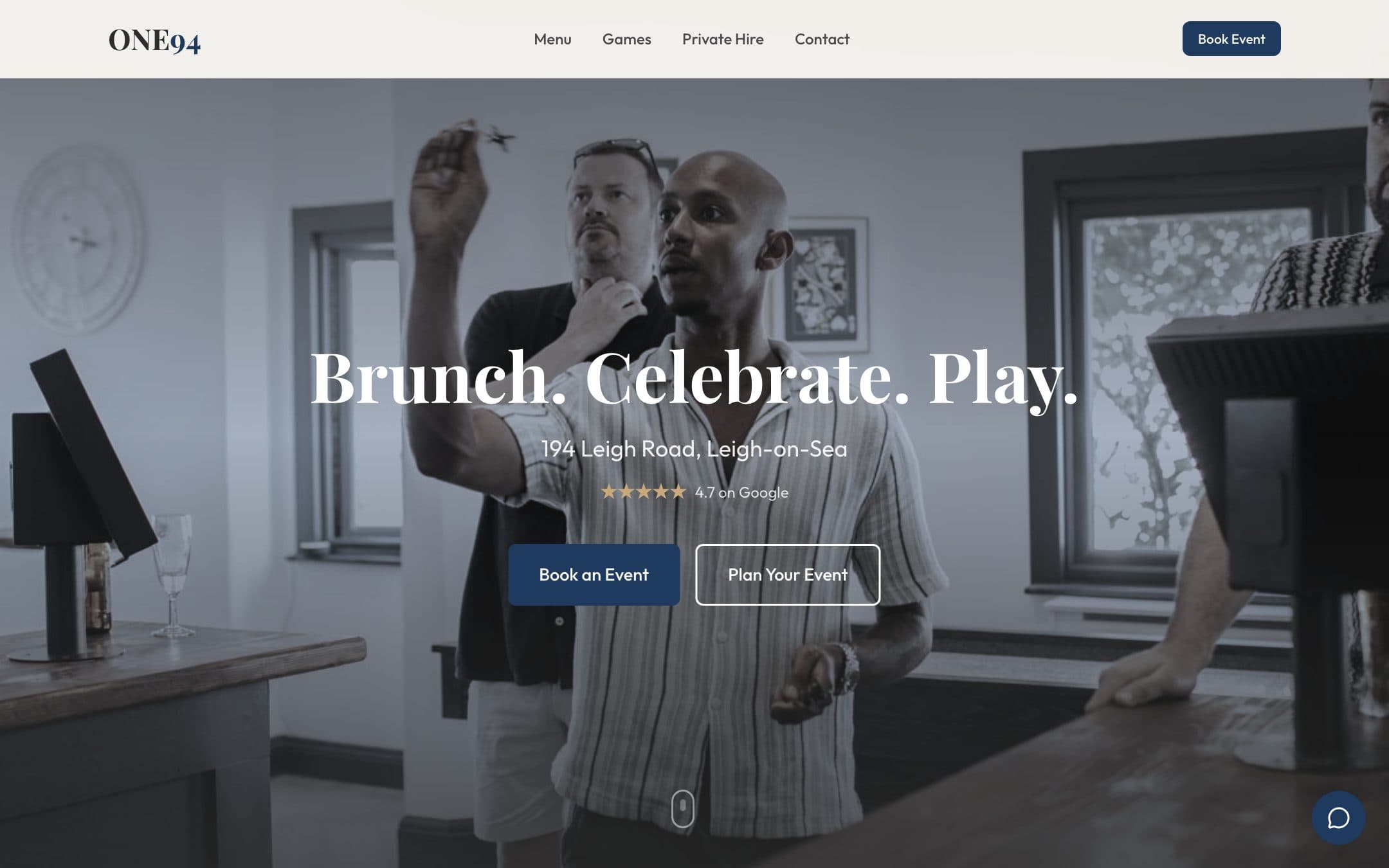
ONE94 sits at 194 Leigh Road in Leigh-on-Sea: small plates, cocktails and spritz, smart dartboards and shuffleboard upstairs, a pool table downstairs, and three distinct spaces for private hire. It is a small venue, open Wednesday to Saturday, with an unusually wide brief: brunch spot, cocktail bar, games lounge and party venue in one building.
Selling that online is harder than it sounds. The venue needed to sell time as well as food: hourly darts and shuffleboard sessions, private hire enquiries for anything from an upstairs games night to exclusive use of the whole building for up to 100 guests, and payment taken at the moment of booking rather than chased afterwards. That is the kind of infrastructure big venues run with a back office behind it. ONE94 needed a version that runs itself.
What we built
We built ONE94's website and the booking, ordering and events platform behind it. Booking a game takes a few steps on one screen: choose darts or shuffleboard, pick a date and see live availability for that day, add your details, then pay by card through Stripe. The booking is created, checkout completes and the customer lands back on a confirmation screen with a summary of what they booked.
Private hire runs through a stepped enquiry flow built around the venue's three spaces: the upstairs games lounge for up to 40 guests, the downstairs restaurant and bar for up to 50, or the whole venue for up to 100. Around the bookings sit the pages that do the everyday work: a menu covering bar food, cocktails and spritz, a games page that sets out prices and house rules, and an events page for parties and corporate hire.
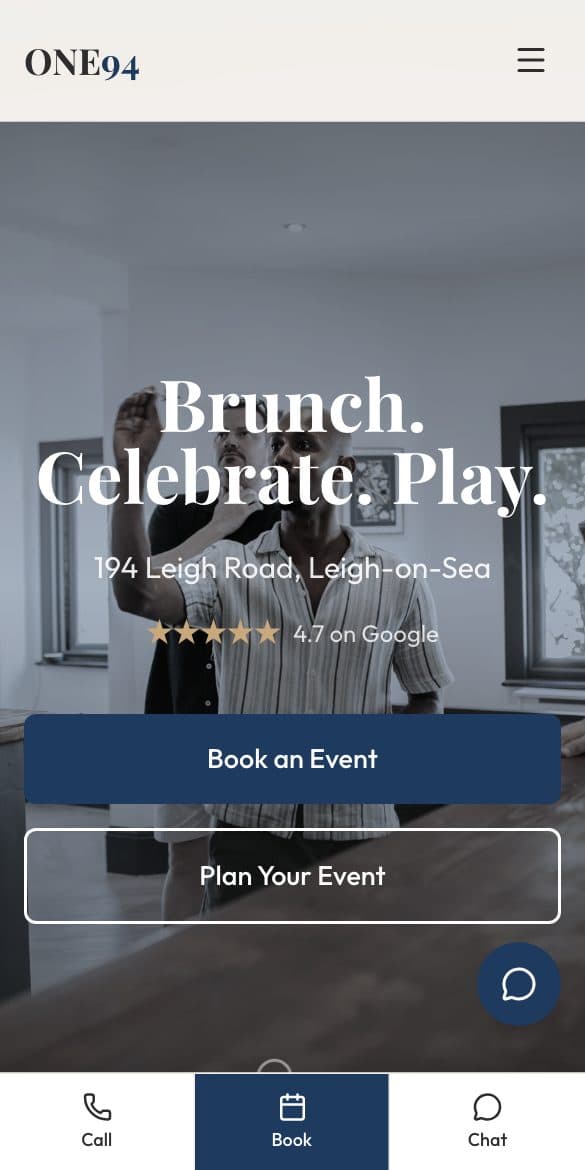
On a phone, a persistent bar keeps call, book and chat one tap away, with a chat widget for questions that do not fit a form. Everything else stays deliberately quiet: pages arrive pre-built, and JavaScript loads only where something is interactive.
The details that mattered
The games widget checks live availability before it shows a single time. Slots already taken render struck through and disabled, so nobody reaches payment for an hour that has gone.
Payment is part of the booking, not a separate errand. The final step creates the booking, hands over to Stripe checkout, and brings the customer back to a confirmation screen.
The venue's house rules sit on the booking page itself: over-18s after 5pm, arrive 15 minutes early, no date changes or refunds. Customers agree before they pay, which prevents awkward conversations at the door.
Pages ship as pre-built HTML, with JavaScript loading only for the booking widget, the enquiry flow and the chat. The menu and events pages stay light and quick on a phone.
The look is cream, charcoal and terracotta with serif headings and a faint grain across the background, closer to a printed menu than a tech product.
Want one like this for your business?
A free demo first, with your content. Then a firm price in writing.
Or call 07438 284755 or email luke@owntimestudios.com.